
Supply shelf
The Supply shelf: what to buy first for works on paper
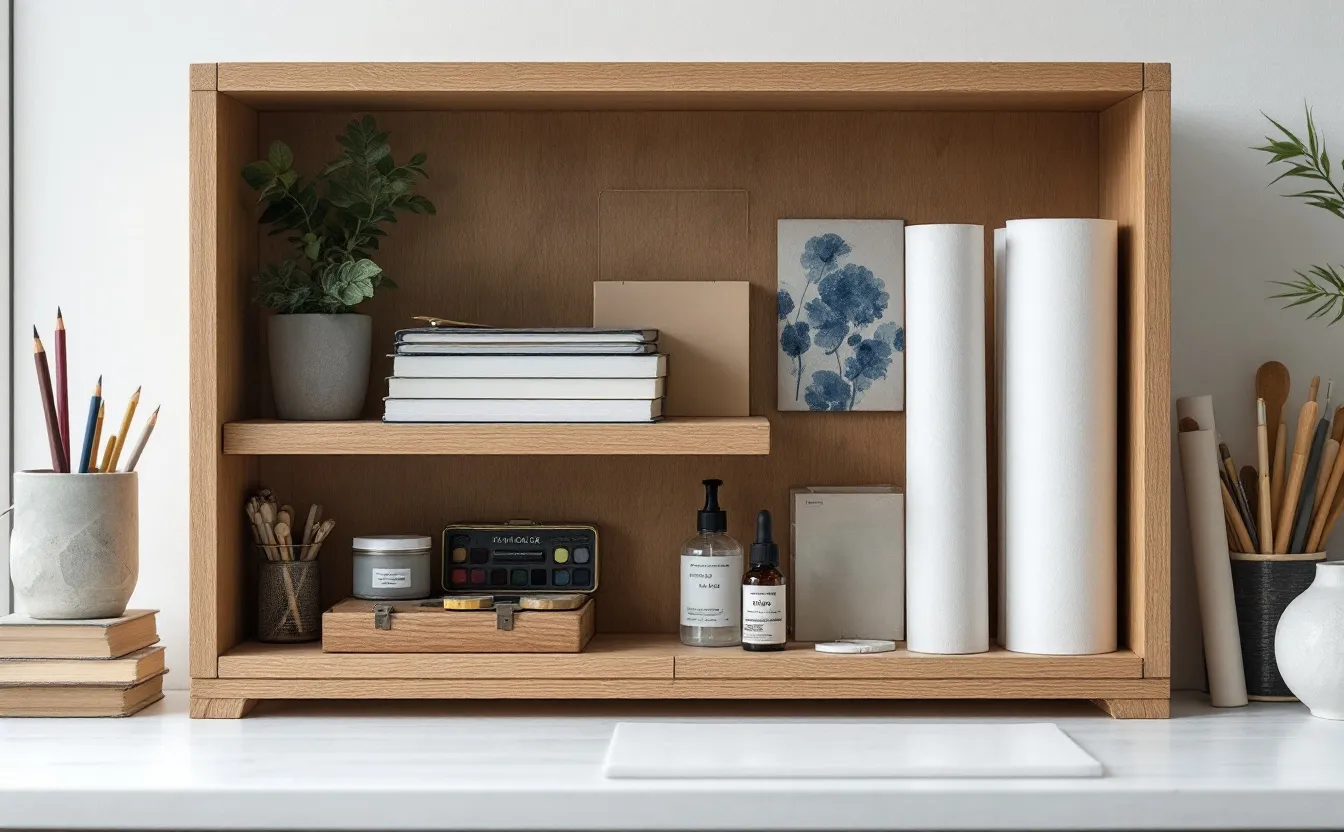
Most people who start drawing or painting at home buy too much of the wrong thing and too little of the right one. A big boxed set of forty colored markers ends up in a drawer, while the single sheet of good paper that would have made a watercolor work never gets bought. This shelf is the opposite approach: a handful of supplies, each chosen for one job, with a note on why it is there.
The cards below are grouped by medium. Each one says what the item is for, not just what it is, and links to the longer notes where the reasoning lives. Nothing here is a requirement. Plenty of good drawings have been made with a ballpoint pen on the back of an envelope.
A few links on this page go to art supplies we describe. As an Amazon Associate I earn from qualifying purchases.
Watercolor & gouache

Introductory artist gouache set
Ten tubes of artist-quality gouache, enough for a full mixing range in opaque color.
- 10 tubes, 14 ml each
- Artist-grade gouache
- Includes white and primaries
Drawing

Artist graphite pencil set, 12 grades
Twelve grades from hard to soft in one tin, enough to learn what each grade does before buying singles.
- 12 pencils, 4H to 6B
- Bonded leads
- Metal tin
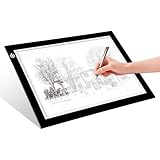
Thin A4 LED light pad
An evenly lit panel for tracing a drawing onto good paper or checking a transfer before you ink it.
- A4 working area
- Adjustable brightness
- USB powered
Printmaking

Deluxe block printing kit (alternative)
Cutter handle and blades, inks, brayer, bench hook and blocks for a first relief print.
- Includes a bench hook
- Several water-based inks
- Soft and mounted blocks

Block printing tool set (alternative)
Carving tool, brayer, baren and bench hook without inks or blocks.
- Linocut handle with cutters
- Brayer and baren
- Bench hook
Books on technique
Books the notes point to when a page can only go so far.
- Keys to Drawing by Bert Dodson: Observation and value, one short exercise at a time. Read the note
- Linocut for Artists and Designers by Nick Morley: Relief printing past the first block, including reduction prints. Read the note
Book links go to Books-A-Million. If you buy through one, Deckle Notes may earn a commission.
How this shelf is put together
Three rules decide what goes on it.
The first is that paper comes first. It decides more about how a drawing or painting turns out than almost any tool you hold. A cheap brush on 100% cotton watercolor paper behaves better than an expensive brush on thin printer paper, because the cotton sheet holds water evenly and lets you lift and glaze. So the paper section is the longest, and it is where we suggest spending a little more.
The second: one good version beats a set of ten. A tin of twelve graphite pencils across the grades teaches you what each grade does. After that you will know whether you need three more 2B pencils or a single 6H, and you can buy singles. The same goes for gouache: a small introductory set with a strong white and three primaries mixes nearly everything.
The third is that everything has to work on a kitchen table. No studio sink, no press bolted to a bench, no solvents that need a fume hood. Printing supplies here are water-based and can be washed up in the kitchen sink. The light pad is thin enough to slide behind a bookshelf.
Paper: where to spend
If you only change one thing, change the paper.
| Job | What to look for | Why |
|---|---|---|
| Watercolor you want to keep | 100% cotton, 140 lb (300 gsm), cold press, in a block | Cotton takes repeated washes without pilling; a block is glued on four sides so it dries flat |
| Watercolor practice and swatches | Cellulose (wood pulp) pad, 140 lb | Cheap enough to use freely; fine for color charts and exercises |
| Mixed sketching | Heavy mixed media paper, roughly 90 to 184 lb | Takes ink, graphite and light washes on the same page |
| Relief printing | Smooth, thin, absorbent paper such as Japanese kozo or printmaking paper | Picks up ink from the block with light hand pressure |
Our longer notes on choosing watercolor paper and picking a mixed media sketchbook explain the weights and surfaces in detail.
Drawing: a small kit
A set of graphite pencils from about 4H to 6B, a kneaded eraser, a plastic eraser, a craft knife or a good sharpener and a pad of drawing paper is a complete drawing kit. Charcoal and colored pencil can come later. The note on drawing pencil grades explains which grades do the work and which ones you will rarely touch.
A thin LED light pad is the one gadget we would add. It turns tracing and transferring a sketch onto good paper from a fiddly window job into a two-minute task, and it is useful for checking the registration of a print.
Watercolor and gouache
Watercolor needs very little: a few tubes or pans, two or three round brushes, a palette with wells and water. Gouache needs the same plus a decent tube of white. If you are not sure which of the two suits you, read gouache vs watercolor before buying either; the choice changes which paper you need.
Printmaking at home
A beginner block printing kit (a cutter handle with a few blades, a soft carving block, water-based ink and a small brayer) is enough for a first print. Add a bench hook to hold the block while you cut; it keeps your free hand behind the blade. A gel plate is the other way in: no carving at all, just paint rolled on a soft clear plate and pulled onto paper. Our guides to linocut at home and gel plate monotypes walk through both.
What we leave off
Some things are worth buying only once you know you need them: an easel, a full studio light, a tabletop etching press, a hundred-color set of anything. The shelf will grow as the notes do, but slowly, and only with supplies that earn their place.
A note on the links
Product cards link to Amazon. As an Amazon Associate I earn from qualifying purchases, which helps pay for the site. Prices and pictures on the cards come from Amazon's own data with the time they were checked; they change often, so the price on Amazon's page is the one that counts. Each item is checked for availability and seller before it goes on the shelf, and removed if that changes. For readers in the United States, the books section links to Books-A-Million, which may also pay us a commission on a purchase.