Choosing watercolor paper: cotton, weight and surface
Ask a room of watercolor painters what made the biggest difference to their work and a surprising number will not name a brush, a pigment or a teacher. They will name the paper. Watercolor is the one medium where the support does half the painting: it decides how far a wash travels, whether an edge stays soft, whether a color can be lifted back out and whether the whole sheet curls into a taco while it dries.
The good news is that the choice comes down to four questions. What is the paper made of? How heavy is it? What surface does it have? And how is it bound? Answer those for the kind of painting you do and the right sheet becomes obvious.
Fiber: cotton or cellulose
Watercolor paper is made either from cotton fiber, from wood cellulose, or from a blend. The label usually says "100% cotton" when it is, and stays vague when it is not.
Cotton fibers are long and strong. A sheet made from them absorbs water slowly and evenly, holds it in the fibers rather than on the surface, and survives being wetted, scrubbed and rewetted. Washes stay open longer, which gives you time to charge in a second color or soften an edge. Glazes go down cleanly over dry layers. Mistakes can often be lifted with a damp brush.
Wood-pulp papers are made from shorter fibers. They are cheaper and perfectly fine for many uses, but they tend to absorb water quickly in some spots and slowly in others. Washes dry with hard edges and blooms you did not ask for, and repeated working roughs up the surface so pigment granulates in odd places. They are excellent for exercises, swatches, color charts and quick studies, exactly the work where you should not be thinking about the cost of each sheet.
A practical way to split the budget: practice on a cellulose watercolor pad and paint anything you want to keep on cotton. Many painters find that the moment they switch, problems they blamed on their own technique simply go away.
Weight, in pounds and grams
Paper weight is printed two ways. In North America it is given in pounds, meaning the weight of a ream of 500 full-size sheets. Everywhere else it is given in grams per square meter (gsm), which is easier to compare because it does not depend on sheet size.
| Pounds (lb) | gsm | How it behaves with water |
|---|---|---|
| 90 lb | about 190 gsm | Buckles under any real wash; needs stretching or taping and light washes |
| 140 lb | about 300 gsm | The standard; cockles a little under heavy washes, flattens if taped or in a block |
| 260 lb | about 550 gsm | Rare; stiff, stays mostly flat |
| 300 lb | about 640 gsm | Board-like; rarely needs stretching, slow to dry, costs more per sheet |
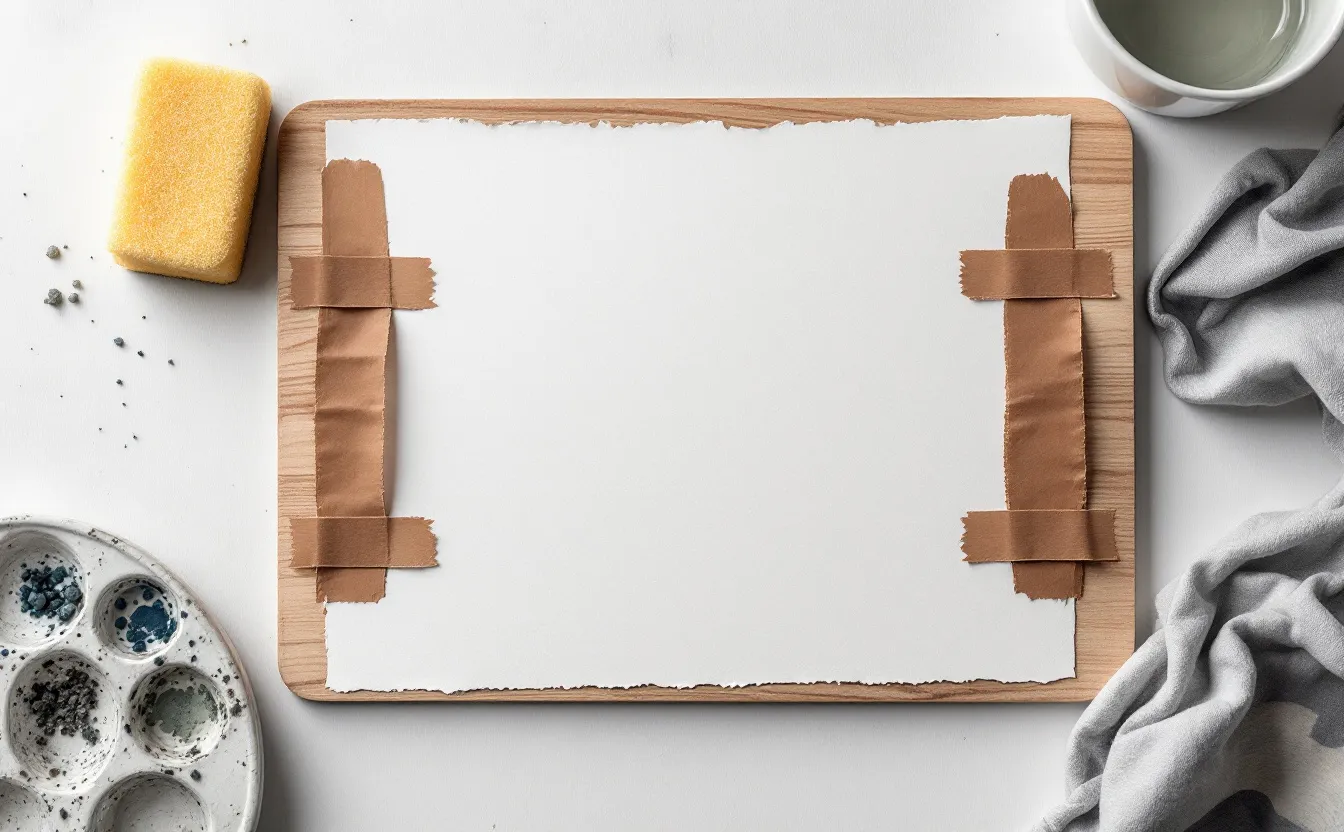
For most people, 140 lb (300 gsm) is the sensible default. It is heavy enough to take several layers, light enough to dry in reasonable time, and cheap enough per sheet to use generously. If you work very wet, or hate taping and stretching, 300 lb is worth trying. If you use 90 lb, plan on stretching it first; the note on how to stretch watercolor paper walks through that step by step.
Surface: hot press, cold press and rough
Watercolor paper comes in three textures, named after the way the sheets were finished.
Hot press paper is pressed through heated metal rollers. The surface is smooth, almost satin. Paint sits on top and dries with crisp edges, fine lines stay fine and detail reads clearly. Botanical painters, illustrators and anyone who combines watercolor with pen work tend to like it. The downside is that washes are harder to keep even: on a smooth surface, every hesitation shows.
Cold press paper is pressed without heat, sometimes between felts, and keeps a moderate tooth. It is the all-rounder. Washes spread evenly, granulating pigments settle into the small hollows and look lively, and both soft and hard edges are possible. If you are unsure, start here. Most paintings you admire were probably made on cold press.
Rough paper is barely pressed at all. Its surface is visibly bumpy, so paint dragged across it skips over the high points and leaves sparkling white flecks. That is lovely for water, foliage and stone, and frustrating for small details or flat graphic shapes.
Texture also varies between makers. One brand's cold press may be smoother than another's hot press is coarse. If you can, buy small quantities of two or three before committing to a large pad. Gouache painters, by the way, often lean toward hot press for flat color; the note on what gouache is explains why.
Sizing: the invisible ingredient
Good watercolor paper is "sized": treated with gelatin or a synthetic agent, either in the pulp (internal sizing), on the surface (external or tub sizing), or both. Sizing controls how fast water sinks in. Without it, paper behaves like blotting paper and every stroke spreads into a fuzzy blot.
You rarely choose sizing directly, but you notice it. A well-sized cotton sheet lets a drop of water bead for a moment before it soaks in. If a new pad seems to resist paint at first, with washes beading up or looking patchy, a quick, light wipe with clean water before painting usually relaxes the surface. Avoid scrubbing hard on the first layer, because it can disturb the sizing and leave a rough patch that drinks pigment.
Blocks, pads, spiral books and loose sheets
How the paper is bound matters as much as the paper itself, especially at a kitchen table.
| Format | Good for | Watch out for |
|---|---|---|
| Block (glued on all four sides) | Painting wet without taping; travel; small finished pieces | Cut the top sheet free with a blunt knife only when dry |
| Glued or fold-over pad | Practice, studies, color charts | Sheets cockle; tape them down first |
| Spiral or sewn watercolor book | Sketching on location, keeping studies together | Thin papers in some books; check the weight |
| Loose full sheets | Larger work, best value per square inch, cutting to any size | Need taping or stretching and a board |
A cotton watercolor block is the simplest way into good paper. Because the sheets are glued on every edge, a heavy wash pulls the paper flat again as it dries. You paint, let it dry completely, then slide a dull knife into the small gap in the glue and work around the edges to release the finished sheet. The next sheet is underneath, ready.
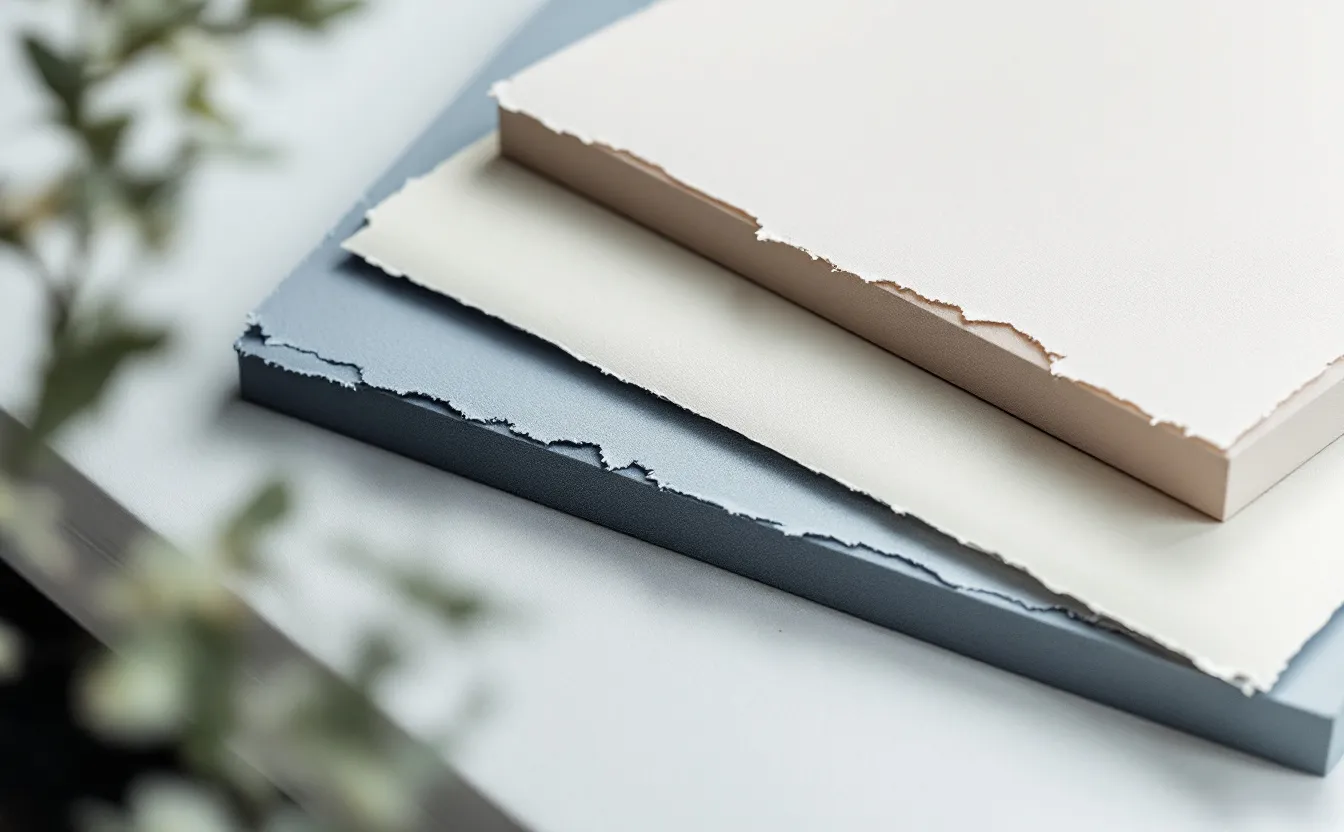
Loose full sheets (22 by 30 inches is a common size) are cheaper per square inch and let you choose your own format, but they need a board and tape, and ideally a bit of space to dry. Tear them to size against a steel ruler for a soft edge that looks like the natural deckle, or cut them with a sharp knife for a clean one.
Color, whiteness and archival quality
Most watercolor papers come in "natural white" (warm, slightly creamy) and "bright white" (cooler, often with optical brighteners in cheaper papers). The difference shows in pale washes and in skies. Neither is wrong; just keep to one when you are learning, so you are comparing paintings rather than papers.
For work you want to keep, look for "acid-free" on the label, and for cotton papers described as archival. Acidic papers yellow and become brittle over decades. Acid-free cotton, kept away from strong light, outlasts the painter.
What to buy first
If you are starting from nothing, this is a sensible first order:
- One cellulose practice pad, 140 lb, roughly 9 by 12 inches, for exercises and swatches.
- One cotton cold press block, 140 lb, in the same size or a little smaller, for pieces you care about.
- Painter's tape or gummed tape and a board, if you buy any loose sheets.
That combination covers almost every beginner's need without locking you into one brand. After a few weeks you will know whether you like smooth or textured surfaces, whether you work wet enough to want 300 lb, and whether a block or loose sheets suit your table. The Supply shelf keeps the current paper picks together, with notes on what each one is for.
Questions people ask
Is mixed media paper good enough for watercolor?
For light washes, yes. Most mixed media papers are heavy enough and sized enough to take a wash or two without falling apart. They do not handle long wet-in-wet work, lifting or repeated glazing the way true watercolor paper does.
Why does my paper buckle even at 140 lb?
Any paper expands when wet and shrinks as it dries. At 140 lb the movement is smaller but still visible under big washes. Taping all four edges to a board, using a block, or stretching the sheet beforehand keeps it flat.
Does the side of the paper matter?
Many papers have a slightly different texture on each side. Some makers mark the "right" side with a watermark you can read correctly. In practice, both sides are usable; pick the one whose texture you prefer and stay consistent.
How should I store unused paper?
Flat, in its wrapping or a portfolio, away from damp and direct sun. Paper absorbs moisture and odors, and sizing can weaken in a humid basement over time.