What gouache is, and how it behaves on paper
A few links on this page go to art supplies we describe. As an Amazon Associate I earn from qualifying purchases.
Gouache is the paint people describe in two contradictory ways. Some call it "opaque watercolor" and expect it to behave like the transparent pans in their travel tin. Others call it "poster paint for grown-ups" and expect something like acrylic. Both descriptions are partly right, which is exactly why the first afternoon with a tube of gouache can be confusing.
The short answer to what gouache means: it is a water-based paint made from pigment and a water-soluble binder, usually gum arabic, with a much higher proportion of pigment than watercolor and, in many brands, an added white filler such as chalk or a little extra white pigment. That recipe makes it dry flat, matte and opaque. It also keeps it rewettable, so a dried layer softens again when water touches it.
Everything useful about painting with gouache follows from those two facts.
The recipe, in plain terms
All the familiar water media start from the same three ingredients: pigment, a binder that holds the pigment to the paper, and water to make it flow. What changes is the proportion and the binder.
| Paint | Binder | Pigment load | Dries | Rewets when dry? |
|---|---|---|---|---|
| Watercolor | Gum arabic | Moderate, finely ground | Transparent, slightly satin | Yes |
| Gouache | Gum arabic (sometimes with dextrin) | High, often with an opaque filler | Opaque, matte | Yes |
| Acrylic gouache | Acrylic polymer | High, matte additives | Opaque, matte | No |
| Acrylic paint | Acrylic polymer | Variable | Satin to glossy, flexible | No |
Watercolor gets its glow from light passing through a thin film of pigment, bouncing off white paper and coming back to your eye. Gouache blocks that path. Light hits the paint surface itself, so the color you see is the color of the paint layer, not paint plus paper. That is why gouache can put a pale yellow over a dark blue and have it read as pale yellow, something transparent watercolor will never do.
The filler is also the reason gouache dries a little lighter or darker than it looks wet. Light colors often dry slightly darker and dark colors slightly lighter, because a wet surface reflects light differently from a matte one. Painters who work in gouache for a while learn to mix a shade past where they want to land.
What "opaque" means at the brush
Opacity is not all-or-nothing. A gouache thinned to the consistency of milk behaves almost like watercolor: it stains, it glows a little, it can be glazed. The same paint at the thickness of light cream covers completely. Most gouache painting happens in that creamy middle range, where one stroke hides what is underneath without building a ridge.
Different pigments cover differently even within the same brand. Earth colors such as yellow ochre and burnt sienna are naturally opaque. Many modern organic pigments, including phthalo blues and quinacridone reds, are transparent by nature, and manufacturers add filler or white to make them cover. A quick test tells you which tubes you are dealing with: paint a black stripe with a marker or India ink, let it dry, then paint a stripe of each gouache across it at your usual consistency. The colors that vanish against the black are your workhorses for covering mistakes.
How it behaves on paper
Because gouache sits on top of the paper rather than sinking in, the surface you paint on matters in a slightly different way than it does for watercolor.
Smooth papers such as hot press watercolor paper and heavy bristol give the flattest, cleanest color fields. That is why illustrators who want crisp shapes favor them. Cold press watercolor paper, with its gentle tooth, gives a softer edge and a bit of sparkle where paint skips across the bumps. Rough paper fights you if you want flat color.
Weight still matters. A thin sheet cockles under the water in the first washes even if the later layers are thick. If you are new to choosing sheets, the longer note on choosing watercolor paper covers weights and surfaces in detail; the same advice applies to gouache, with an extra nudge toward smoother surfaces.
Gouache also works on surfaces watercolor dislikes. It sits well on toned paper, because it can cover the tone; on mixed media paper; on illustration board; and in a sketchbook that would buckle under a full wet wash, as long as you keep the paint creamy rather than watery.
Rewetting: the good and the bad
The single behavior that surprises acrylic painters most is that dried gouache softens again under water. Lay a stroke of wet blue over a dry red and the red may lift and mix into the blue, turning muddy at the edges.
That rewetting is a tool as much as a problem.
- It lets you reactivate paint on the palette days later with a damp brush, so very little is wasted.
- It lets you soften an edge after it has dried by stroking it with a clean, damp brush.
- It lets you lift a small highlight back out with a damp brush and a tissue.
To avoid unwanted lifting, use paint that is thick enough to cover in one pass, keep the brush moving rather than scrubbing, and let underlayers dry fully. A hair dryer on a low setting speeds that up. Many painters plan their layers from thin to thick, so the early layers are thin enough to hold still and the final layers are thick enough to sit cleanly on top.
Cracking and thickness
Gouache is not built for impasto. Its binder is brittle once dry, and a thick layer on a flexible sheet can crack when the paper bends. The rule of thumb is to keep any single layer no thicker than a credit card is wide. If you need texture, build it with several thin opaque layers rather than one heavy one, and work on a stiffer surface such as heavy paper taped to a board.
Old dried paint on the palette sometimes behaves badly for the same reason. Some colors rewet smoothly for weeks; others turn chalky or gritty. Squeeze small amounts and refresh them often.
Acrylic gouache is a different paint
Acrylic gouache sits next to traditional gouache in the shop and looks identical in the tube. It dries just as matte and opaque. The difference is the binder: acrylic polymer instead of gum arabic, which means it does not rewet. Once dry, it stays put, so layering is simpler and edges stay crisp. The cost is that you lose the ability to soften or lift, and dried paint on the palette is lost for good.
Neither is better. Traditional gouache suits loose work, sketchbook pages and anyone who likes to rework an area. Acrylic gouache suits flat graphic work, multiple layers of fine detail, and painting on surfaces that will be handled.
A first session with a small palette
You do not need a large set to learn gouache. A good first palette is a warm and a cool version of each primary plus white and, if you like, black:
- A lemon yellow and a warmer yellow such as a medium yellow or ochre.
- A crimson or magenta and a warmer red.
- A cool blue such as phthalo or cerulean and a warmer ultramarine.
- A large tube of white, because you will use far more of it than anything else.
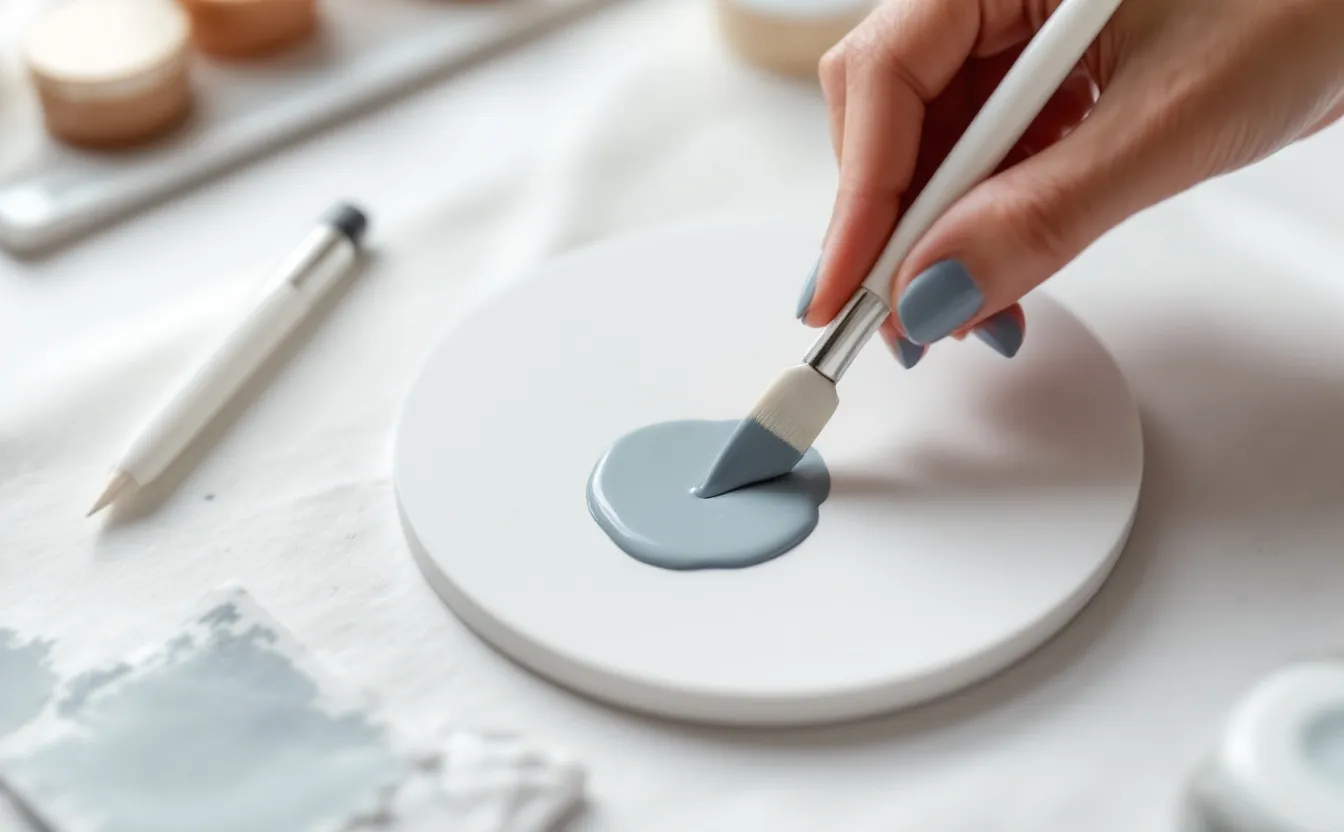
Squeeze pea-sized amounts onto a palette with wells, since gouache spreads. Keep two water jars, one for rinsing and one clean. Mix each color in its own well with enough water to reach a creamy consistency, and test each mix on a scrap strip of the same paper you are painting on.
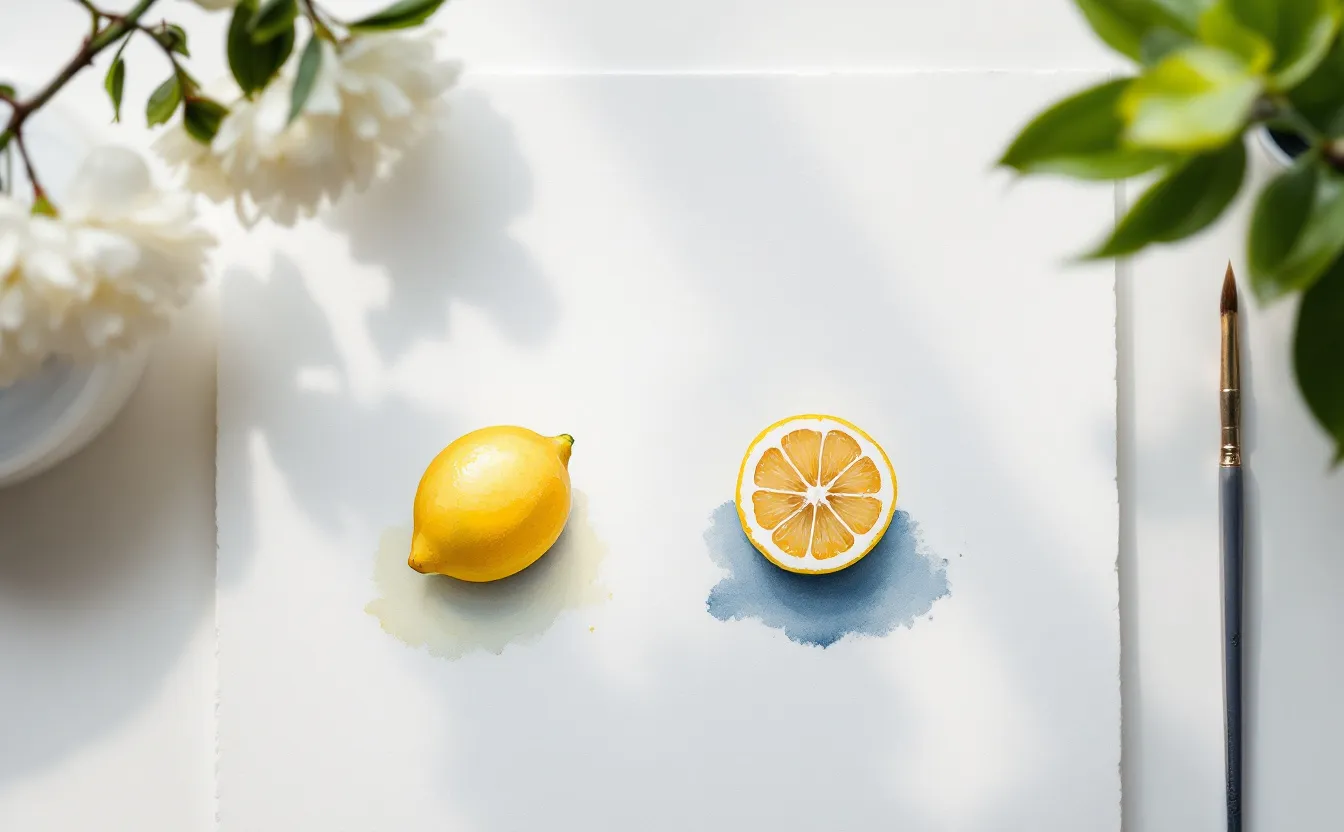
Then paint something simple with clear shapes: a lemon on a cloth, a mug, a window at dusk. Work from the background forward, dark to light or light to dark, whichever feels natural, and notice how a later layer covers the earlier one. That moment, when a pale highlight sits perfectly on a dark shape, is the reason people stay with gouache.
If you want to compare it directly with transparent paint, the note on gouache vs watercolor puts the two side by side. Other wet-media notes are collected under watercolor and gouache.
Questions people ask
Is gouache the same as tempera?
Not quite. Historically, tempera meant paint bound with egg. In school supply aisles "tempera" now usually means an inexpensive opaque poster paint. Gouache is closer to artist watercolor in quality, with finely ground pigment and gum arabic.
Can I use watercolor brushes for gouache?
Yes. Synthetic watercolor brushes work well. Gouache is slightly thicker, so many painters like flats and filberts alongside rounds, and they rinse brushes promptly so the filler does not build up at the ferrule.
Does gouache fade?
Lightfastness depends on the pigment, not the paint type. Many brands print a lightfastness rating on the tube. Some older or cheaper colors, especially certain bright pinks and violets, fade in daylight. Check the rating if you plan to frame and hang the work.
Can I varnish a gouache painting?
It is usually framed behind glass instead. Varnish can darken a matte surface and, because traditional gouache rewets, a water-based varnish can lift it. Framing with a mat keeps the painting off the glass and protects the surface without changing it.