Gouache vs watercolor: what actually changes on the page
A few links on this page go to art supplies we describe. As an Amazon Associate I earn from qualifying purchases.
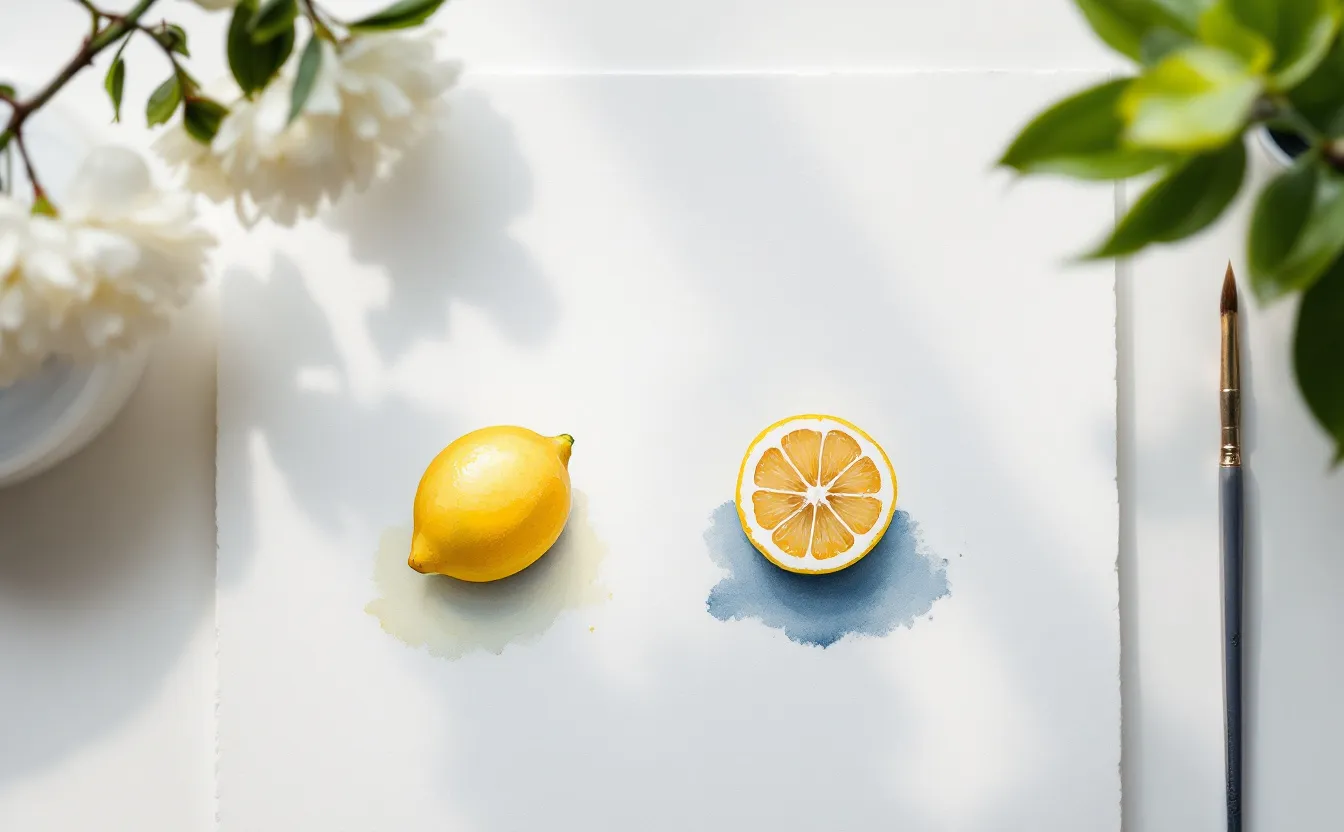
Put a tube of watercolor and a tube of gouache side by side and you will struggle to tell them apart. Both are pigment in gum arabic, both thin with water, both rewet when dry. Paint the same lemon in each, though, and the two pictures look like they were made by different people. One glows from within; the other sits on the paper like a cut-out of color.
The difference is not mysterious, and once you understand it you can choose the right paint for a subject in seconds, or use both in the same picture. Here is the comparison as it plays out at the table, rather than on a spec sheet.
Where the light comes from
Watercolor is transparent. A wash is a thin film of pigment, and light travels through it, hits the white paper underneath and comes back out. The paper is the light source. That is why watercolor has its characteristic luminosity and why the white of the paper is the only true white you have.
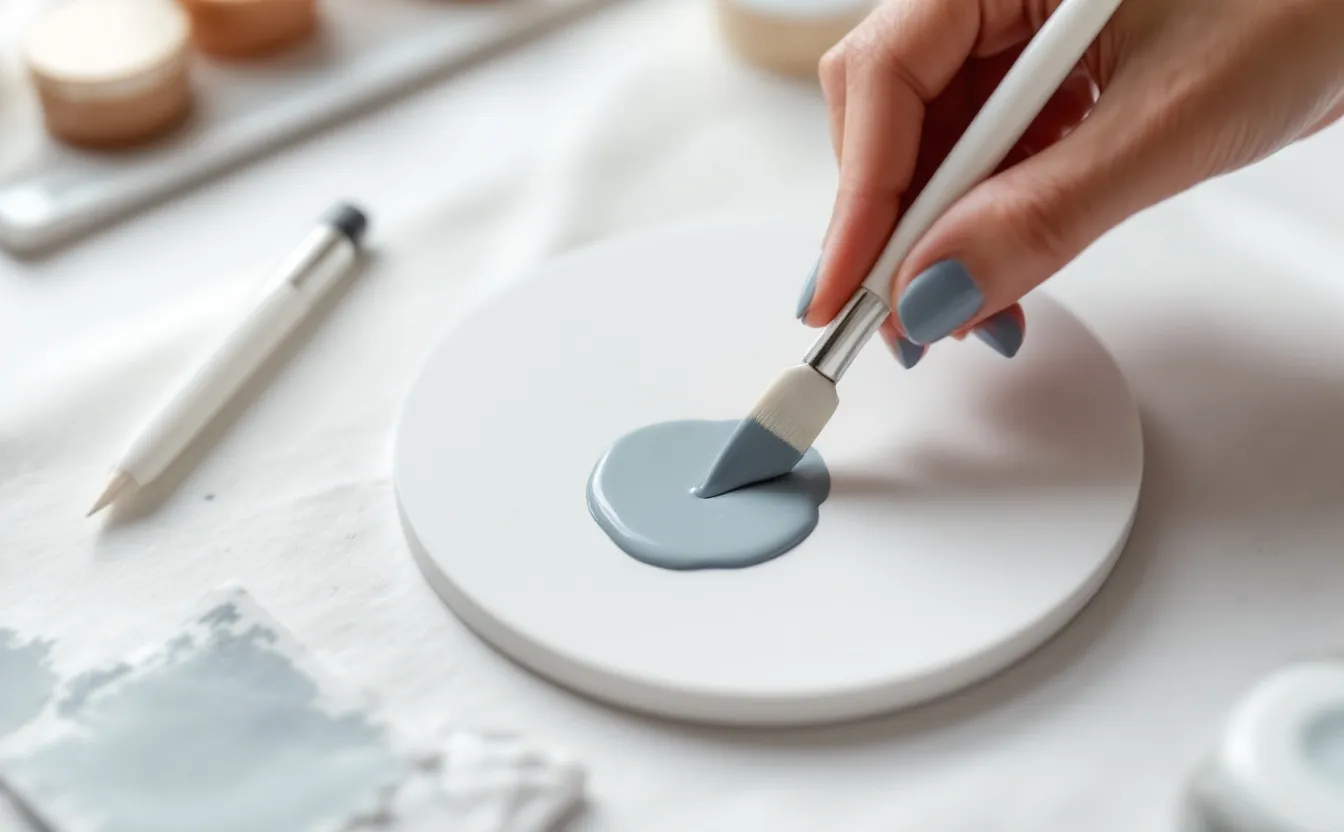
Gouache is opaque. It carries more pigment and often an opaque filler, so light bounces off the paint surface itself. The paper underneath stops mattering once it is covered. Gouache has its own white, in a tube, and you can put light over dark.
Almost every practical difference follows from this one fact.
Working order
In watercolor, you plan from light to dark. You reserve the whites first, either by painting around them or by masking them, lay the palest washes, then build darker layers over them. Each new layer darkens what is underneath. There is no going back to light except by lifting paint off.
In gouache, you can work in almost any order. Many painters block in darks first, then paint mid-tones and finish with highlights on top. Others work background to foreground. A pale sky can go over a dark hill line to correct it. That freedom makes gouache feel more forgiving to people coming from drawing or acrylic.
| Question | Watercolor | Gouache |
|---|---|---|
| Can light go over dark? | No | Yes |
| Where do whites come from? | The paper | White paint (or the paper) |
| Typical working order | Light to dark | Any; often dark to light |
| Surface when dry | Slight sheen, stained into paper | Flat, velvety matte |
| Edges | Soft blends easy, hard edges from drying | Crisp shapes easy, soft blends harder |
| Corrections | Lifting with damp brush, limited | Paint over, or lift and repaint |
Corrections and mistakes
Watercolor mistakes are part of the look. You can lift a little paint with a damp brush and a tissue, especially on cotton paper and with non-staining pigments, but a strong stain is usually there for good. Many watercolorists learn to work with accidents: a bloom becomes a cloud, a hard edge becomes a ridge of rock.
Gouache mistakes can usually be painted over once the layer is dry. The catch is that gouache rewets. A wet stroke over a dry layer can lift the color underneath and mix with it. The cure is to paint the covering layer slightly thicker, with fewer strokes, and to let underlayers dry completely. The note on what gouache is goes into that rewetting behavior in more detail.
The drying shift
Both paints change as they dry, in opposite ways.
Watercolor dries lighter, often by a noticeable margin. A wash that looks rich when wet fades as the water evaporates and the pigment settles into the paper. Beginners routinely end up with pale, timid paintings because they judged their values wet. The fix is to mix stronger than you think and to test on a scrap strip.
Gouache shifts less, but unevenly: light colors tend to dry a touch darker and dark colors a touch lighter, because the matte surface scatters light differently from a wet, glossy one. Matching a color across two sessions is the hard part, which is why gouache painters often mix a little more than they need and keep it on a covered palette.
Paper matters differently
Watercolor depends on its paper more than any other medium. Cotton paper lets washes flow evenly and accept glazes; thin or poorly sized paper fights you at every step. The note on choosing watercolor paper covers what to look for.
Gouache is more tolerant. Because it covers the surface, it works on cellulose watercolor paper, mixed media paper, illustration board and even toned papers. Smooth surfaces such as hot press paper and bristol suit flat graphic color. Textured cold press gives gouache a softer, more painterly edge. What gouache does not like is flexing: thick layers can crack if the paper bends, so tape the sheet or use a stiffer one.
Look and subject
Watercolor excels at atmosphere: skies, water, mist, light through leaves, anything where you want transitions and glow. Its happy accidents (blooms, granulation, soft edges where wet meets wet) suit landscapes and loose botanical studies.
Gouache excels at shape, pattern and design: illustration, flat-color landscapes, signage-like clarity, small studies that need to read from across the room. It is also the paint of choice for many animation background painters and plein air sketchers who need to make a clear statement quickly.
There is no rule that a subject belongs to one or the other. A useful exercise is to paint the same small subject twice, once in each, in the same session. You will learn more from that comparison than from any amount of reading.
Brushes, palettes and cleanup
Both paints use the same brushes. Watercolor painters tend to favor rounds and mops that hold a lot of water; gouache painters add flats and filberts for laying down even shapes. Synthetic brushes work well for both.
Palettes differ slightly. Watercolor can be left to dry on the palette and rewet indefinitely. Gouache can too, but some colors turn chalky or crack after drying, so many painters squeeze smaller amounts or use a palette with a lid and a damp sponge to keep paint workable for a few days.
Cleanup is the same: water and a little soap for brushes.
Using them together
Nothing stops you from using both in one painting, and many artists do. A common approach is to lay in the big atmospheric areas in transparent watercolor, then add opaque gouache for the final details, highlights and crisp edges. A white gouache highlight on a watercolor eye, a few opaque flowers over a soft watercolor meadow, snowflakes over a dark sky: the combination is old and reliable.
The only thing to watch is order. Once gouache is down, a watercolor wash over it will tend to lift and cloud it. Finish your transparent passages first, then commit to opaque.
How to choose your first paint
If you are deciding which to buy first, ask what you enjoy looking at. If you love loose skies, translucent flowers and the feeling that a painting happened by itself, start with watercolor. If you love flat bold color, clear shapes and the ability to fix things, start with gouache.
Either way, you need surprisingly little: a few colors, two or three brushes, decent paper and water. Both paints can be tried for the price of a single good brush. More notes on both are collected under watercolor and gouache.
A side-by-side exercise
The fastest way to feel the difference is a small paired study. Tape two pieces of the same paper next to each other, each about 5 by 7 inches. Put a simple object in good side light: a lemon, an egg or a white cup on a colored cloth.
On the left, paint it in watercolor. Leave the highlight as untouched paper, lay a pale wash for the light side, let it dry, then glaze the shadow side in one or two darker layers. Resist going back in.
On the right, paint it in gouache. Block in the background and the shadow shape first, then the mid-tone of the object, then finish with the highlight in a creamy mix of white and a little yellow, placed last and on top.
Compare the two after they dry. The watercolor will probably have softer edges and a quiet glow where the paper shows through. The gouache will probably have firmer shapes, more solid color and a highlight that sits convincingly on the surface. Neither is the right answer. The exercise shows which way of building a picture feels natural to you, which is the best guide to which paint to explore first.
Questions people ask
Can I turn watercolor into gouache by adding white?
Partly. Adding Chinese white or titanium white to watercolor makes it more opaque, a technique sometimes called body color. It will not quite match the dense coverage of a purpose-made gouache, but it is a good way to experiment.
Which is easier for beginners?
Gouache is usually easier to control because you can correct it. Watercolor is easier to set up and carry, and its unpredictability is part of its charm. Neither is better for learning; they teach different things.
Do they use the same paper?
They can. Watercolor needs good watercolor paper more than gouache does. If you buy one paper for both, a 140 lb cold press or hot press watercolor paper handles each well.